Strength · Recovery · Field note
What Gets to Stay
A program can be working and still contain more work than I need.
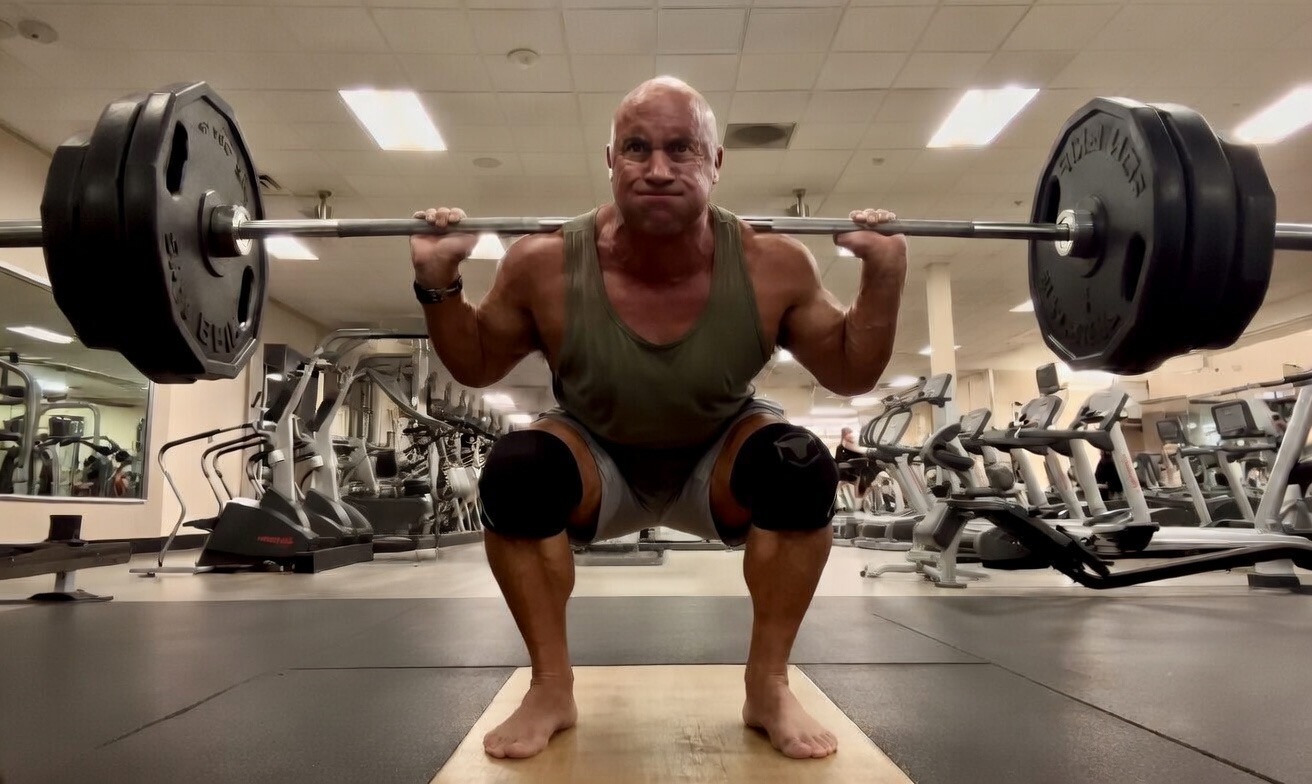
I am now far enough into this periodisation experiment for it to have started repeating itself.
The structure is a twelve-week wave made up of three four-week blocks: twelve reps, eight reps and five reps, with a deload at the end of each block. This is my second time through the full wave, and I have just entered the five-rep strength phase again.
By the numbers, it is working. My strength is similar to, and in places slightly better than, the first time through.
But something else has repeated too.
The week-three bill
During both passes through the program, I have reached the transition between the second and third weeks of the eight-rep block feeling generally flat and beaten up.
It is not joint pain. Nothing feels injured. It is more like the whole system has had enough: low energy, poor enthusiasm and the sense that even ordinary things require a little more effort than they should.
Interestingly, that feeling eased once I moved into the five-rep block, even though the weights became heavier.
That suggests the problem is not simply load. The eight-rep phase creates a particular combination of load and volume, and by the end of its second week the accumulated bill appears to arrive.
I am reluctant to call everything central nervous system fatigue, because that can become a convenient scientific-sounding bucket for any day when the bar feels heavy and I feel grumpy. What I can say with confidence is that the fatigue is general rather than local, it has appeared in the same place twice, and reducing volume seems like the most sensible first experiment.
The extra set
Bench press has been running at four working sets while deadlift, squat and overhead press have each been running at three.
Bench also comes early in my training rotation, which means that extra work may be front-loading fatigue that compounds through the rest of the week.
Four sets did not originally look excessive. That is part of the problem with fatigue: every individual decision can appear perfectly reasonable while the combined system quietly becomes unreasonable.
So bench is dropping from four working sets to three, effective immediately.
The change is small enough to test without dismantling the program. It is also being made during the five-rep phase, where the loads are highest and the difference should be easier to observe.
If I arrive at the same point next time without the familiar flatness, the missing set may have told me something useful.
The lift I did not want to release
The more complicated decision involves seated overhead press.
I have deliberately held it back because of a shoulder niggle that could be coming from bench press, overhead press or some charming collaboration between the two.
There is also a practical problem. The seated overhead setup at my gym requires me to reach behind my head to take the bar. At lighter weights it is manageable. Once the bar gets beyond 185 pounds, the experience changes from mildly awkward to what I can only describe as frightful mode.
The obvious alternatives are not especially attractive.
Heavy dumbbells become difficult to move safely from the knees to the shoulders. The machine shoulder press does not feel like a legitimate lift to me, which is not an argument grounded in biomechanics so much as an argument grounded in my own stubbornness.
A better machine with front-loading braces would solve much of this, but my gym does not have one.
What became apparent while thinking about it was that part of my attachment to the lift had little to do with what it currently contributes. A heavy seated overhead press is uncommon. It is impressive. I like being able to do something that most people cannot.
That is honest, but it is not necessarily a sufficient reason to keep pushing a movement that feels increasingly awkward and may be irritating my shoulder.
My shoulders are already one of my stronger physical features. I do not need to keep proving their existence to myself.
For now, the sensible path is lower weight and higher repetitions. That preserves the movement while removing the dangerous setup, the shoulder irritation and some of the ego-driven temptation to keep adding plates.
When leg day rents the entire week
Leg day has developed a similar problem.
It currently consists of four working sets of leg extensions, three sets of squats, two sets of leg press and two sets of Romanian deadlifts.
Once the loads become heavy, the resulting soreness takes about a week to clear.
At that point, DOMS is no longer just a training variable. It has become a quality-of-life expense. Leg day has rented the entire week and is leaving its dishes in the sink.
Squat remains the priority. After the knee injury in May 2026, I had to take it back to 100 pounds before rebuilding through 120 and 135. I recently completed three hard sets of five at 270 pounds, which feels like a meaningful return.
That is the lift I want to protect.
Leg extensions do not directly train the squat pattern, but they contribute most visibly to the shape of my legs. That matters to me too. There is no virtue in pretending aesthetics have nothing to do with why I train.
Leg press and Romanian deadlifts feed more directly into the squat and deadlift, but they also add fatigue to movements already being trained elsewhere.
The current idea is not to remove either exercise completely. It is to stop treating every exercise as though it deserves its own periodisation campaign.
Romanian deadlifts may become one lighter working set of around twelve repetitions, using a fixed weight regardless of the current block. Leg press can remain, but with reduced volume or intensity.
That may slow progress on those movements. I am comfortable with that. There is no deadline and nobody is waiting at the finish line with a ceremonial leg-press certificate.
Travel and the max test
Travel is coming in October and November 2026, and again in March and April 2027. Much of that time will be spent living in Airbnbs, which makes rigid programming difficult and may occasionally require accepting that the available gym considers two mismatched dumbbells and a yoga mat a complete strength facility.
Rather than beginning another twelve-week wave immediately before leaving, I will finish the current five-rep block and treat the travel period as maintenance.
That also creates a useful window for testing true one-rep maximums.
My normal deload week has not been enough to leave me ready to express a genuine maximum. I recover, but I do not feel fully switched back on.
A better sequence for me appears to be a deload week, followed by a preparation week in which intensity returns without much volume, and then the max test the following week.
That is the difference between merely resting and preparing to perform.
It may not be the perfect taper on paper, but it reflects what repeated experience has told me about how long my own system takes to come back online.
The harder part
A broader pattern has emerged from all of this.
I resist taking things out.
Adding something feels constructive. It carries the possibility of improvement. Removing something feels like surrendering a known quantity for a benefit that has not yet arrived.
That makes subtraction emotionally harder than addition, even when subtraction is plainly the more intelligent decision.
The strange thing is that my resistance usually lasts about a week. Once the lighter structure becomes established, I stop mourning the missing work and simply get on with the new routine.
I have seen that pattern often enough now to know that the first objection is not always the final judgement. Sometimes it is merely the mind objecting to an empty space where something familiar used to be.
The program is working. The answer is not to throw it away.
The answer may be to remove the parts that are charging more than they contribute.
The point of training is not to discover how much training I can survive. It is to become stronger while remaining available for the rest of my life.
I suspect I will resist that idea for about a week. Then it will simply become what I do.