He Maimai Aroha
Mina Mitai
I met Mina Mitai around 1991, when I started working for Radio Te Arawa.
By the following year I had built a recording studio there. Twenty-four channel mixer, eight-track half-inch tape machine, decent outboard gear, good microphones, and a purpose-built vocal booth and control room.
At the time, I thought it was magnificent.
Mina would come up to the station and I would record his songs and, eventually, his albums.
He was a musician, a carver and a saxophone player, deeply committed to his music. He was also the first real artist who trusted me to record an album.
When I designed his album covers, he would bring in old photographs. His parents’ homestead. Pictures from his show-band days. Evidence of whole chapters of his life that had taken place before I knew him.
I saw the photographs, but I don’t think I really saw them.
I was young and fresh as an audio engineer. I was interested in getting a good vocal sound, making the mix work, getting the tape machine behaving itself.
Mina was thinking about other things.
It was never only his own music that he wanted recorded.
He would go out into the community and find some of the older voices, people who had long since stopped performing, and bring them into the studio.
Then we would record them.
Their songs.
Their voices.
The way they sang them at that age.
At the time, I didn’t understand the significance of it. I just knew Mina had brought someone in and we were making another recording.
Looking back now, I see it very differently.
He was preserving something.
I got to know some of his family too, all of them special in their own way. I remember recording his daughter singing what I believe was an original song.
Her voice was pure.
The voice of an Anahera.
Mina himself was one of those people who became part of the landscape of Rotorua without ever seeming to make much noise about it.
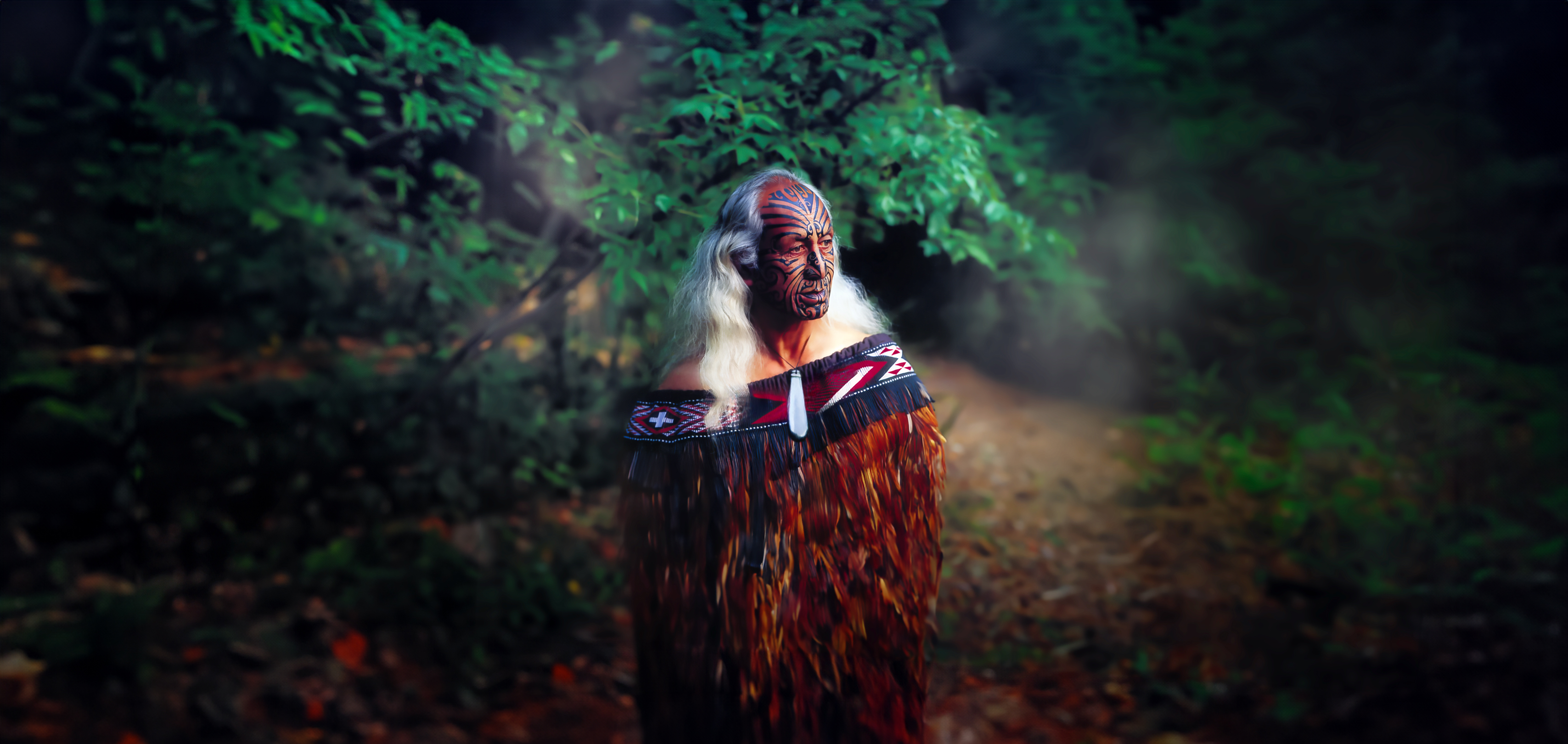
At one point, a Māori tourism operator used his image on its buses. The same image I’ve used here. So for a while, there was Mina travelling around town in a way, looking out from the side of a bus.
It somehow suited him.
He would also turn up at tangi with his van and portable sound system and play saxophone as people arrived for the burial.
He did that for a lot of families over the years.
If Mina turned up at your family’s funeral, it was as though a special bird had come and rested on the tombstone.
He played at my mother’s funeral.
It was beautiful.
There were other sides to him.
He was very fit and played hockey well into old age.
He carved.
He played music.
He gave his time to kōhanga and kura kaupapa Māori.
He was one of those people who seemed to be doing something all the time, but never made you feel as though he was trying to prove anything by it.
Around town he was quietly spoken and humble.
Every now and then he would seek me out simply to tell me something good about myself.
He had no way of knowing that more than once he managed to do that at exactly the right time.
There was something unusual about the way Mina moved through the world.
To me, he seemed almost as though he had come from somewhere else.
An elder from Star Trek.
Not in any theatrical sense. There was just something about the way he spoke and the way he regarded people.
I never heard him say anything judgmental about anyone.
Life seemed to hold some kind of wonder for him.
Sometimes it felt as though he looked at ordinary people and saw something more.
And the funny thing is, I never really knew why.
I didn’t know much about his beliefs.
I didn’t know the full story of his life.
I didn’t know what experiences had shaped him, or what had made him spend so much of his time encouraging people, preserving voices, turning up at tangi, making music and giving things away.
There was always a bit of mystery around him for me.
As I got older, I began to wonder about that more.
What makes someone become that kind of person?
I still don’t know.
Maybe there wasn’t one great answer.
Maybe it was simply there in the way he lived.
This morning I spent some time thinking about Mina.
Really thinking about him.
Kume, kume.
Pulling the memories up from somewhere deep.
The recording studio.
The photographs.
The old singers.
The saxophone.
The van.
The hockey.
The quiet words.
My mother’s funeral.
And as I remembered him, a lovely peace came over me.
It also made me think about how strange memory can be.
There are people we meet when we are young and we make very little of the moment. We see what is directly in front of us because that is all we are equipped to see.
Then thirty years pass.
The person has not changed in the memory.
But we have.
And suddenly we notice things that were there all along.
I sometimes think about the fact that there comes a day when we meet someone for the last time and neither of us knows it.
No announcement.
No great farewell.
Just another ordinary encounter.
Perhaps a wave.
Perhaps a few words.
Then life moves on.
I don’t remember the last time I saw Mina.
Maybe that is as it should be.
What I do remember is a man walking into a little recording studio carrying old photographs and songs, bringing voices with him that he thought were worth keeping.
At the time, I was recording them onto tape.
It has taken me a little longer to understand what he was doing.