Film · Working idea
An Otherwise Ordinary Day
These are the things you think about while driving to work.
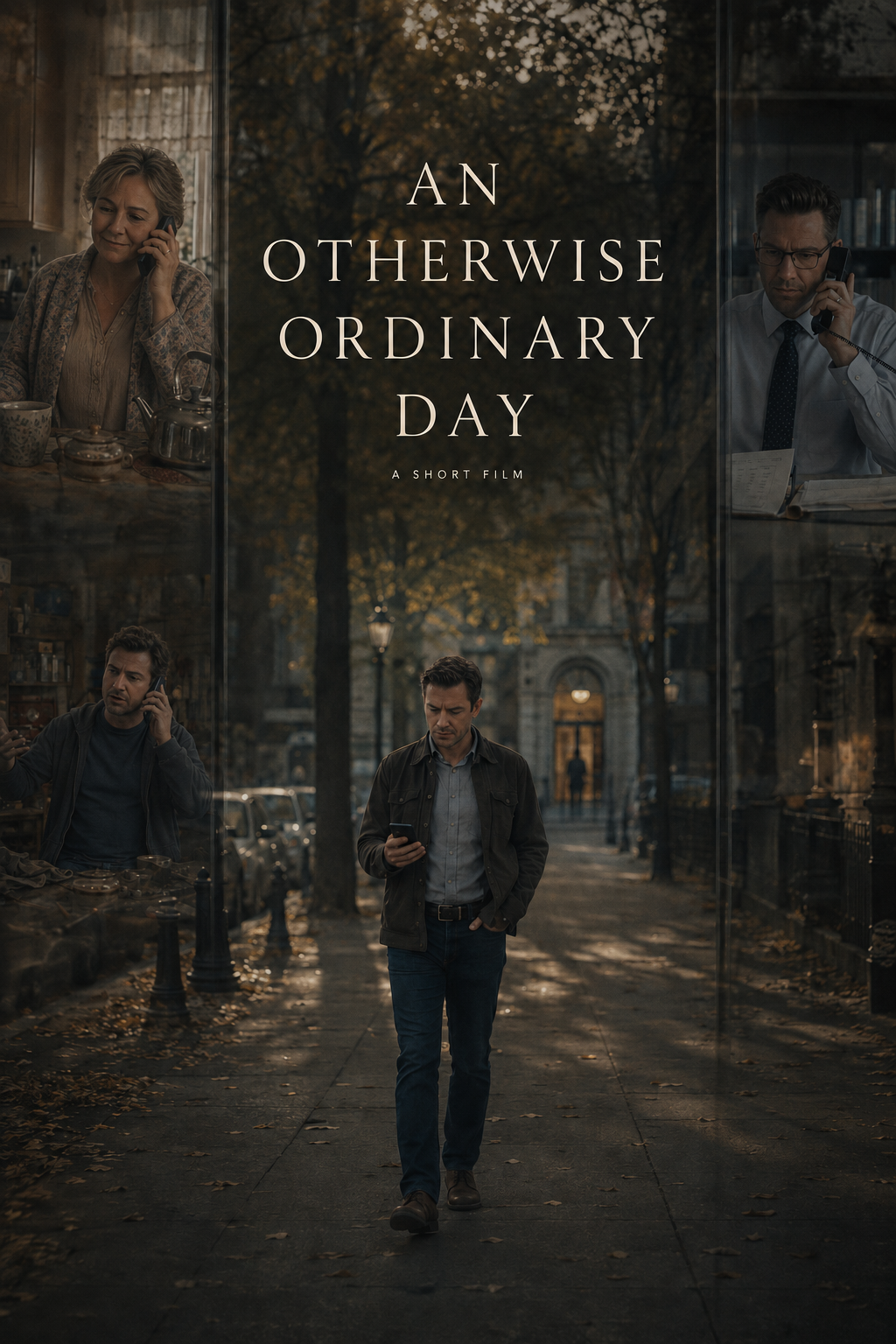
I had an idea for a short film with the working title An Otherwise Ordinary Day.
A man is walking somewhere. We don’t know where, and there is nothing about the way he is dressed or behaving that suggests the destination matters.
The film appears to be one continuous shot, and he remains visible throughout. Around him, the screen divides into two and sometimes three panels. One follows him walking. Another shows his phone as he scrolls through his contacts. The third opens into the world of whoever answers his call.
The people in his phone
His contact list is a mixture of normal names and the strange shorthand accumulated over years of knowing people:
Some of these people are called. Others merely flick past quickly enough to make you wonder whether you really saw them. A few names may remain on screen for only a fraction of a second—little fragments of unexplained history passing beneath his thumb.
- Do Not Answer
- Bitch Face
- Owes Me Money
- I Owe Him Money
- Rip Off
- Funny Haircut Guy
- Bean Counter
- The Suit
- Fakwit
- Probably Keith
- Steve—Not That Steve
- Dave Work
- Dave Pub
- Dave—Actual Dave
- Plumber
- Plumber Useless
- Plumber New
- Dentist Maybe
- Call Only If Arrested
- Met at Funeral
- Never Again
- Never Again 2
- Won’t Shut Up
- Tall Sarah
- Airport Guy
- French Richard
- Borrowed My Drill
- Dead to Me
- Apologise First
- No Idea
- Mum
Conversations already in progress
He chooses someone and calls.
Most of the conversations begin as if they have already been going on for years—which, in a sense, they have. Nobody introduces themselves or explains their relationship. They simply continue from wherever they last left off.
A good friend answers and immediately gives him shit. There is no hello and no need for one.
“Where are you?”
“Walking.”
“You look ridiculous when you walk.”
“You can’t see me.”
“I don’t need to.”
Another contact is saved as Fakwit.
He is a childhood friend. Why the protagonist decides to call him is unclear, but the conversation is immediately tense. There is the unmistakable sound of an old argument being dragged back into daylight.
Neither of them is prepared to surrender whatever point they have apparently been making since 1987.
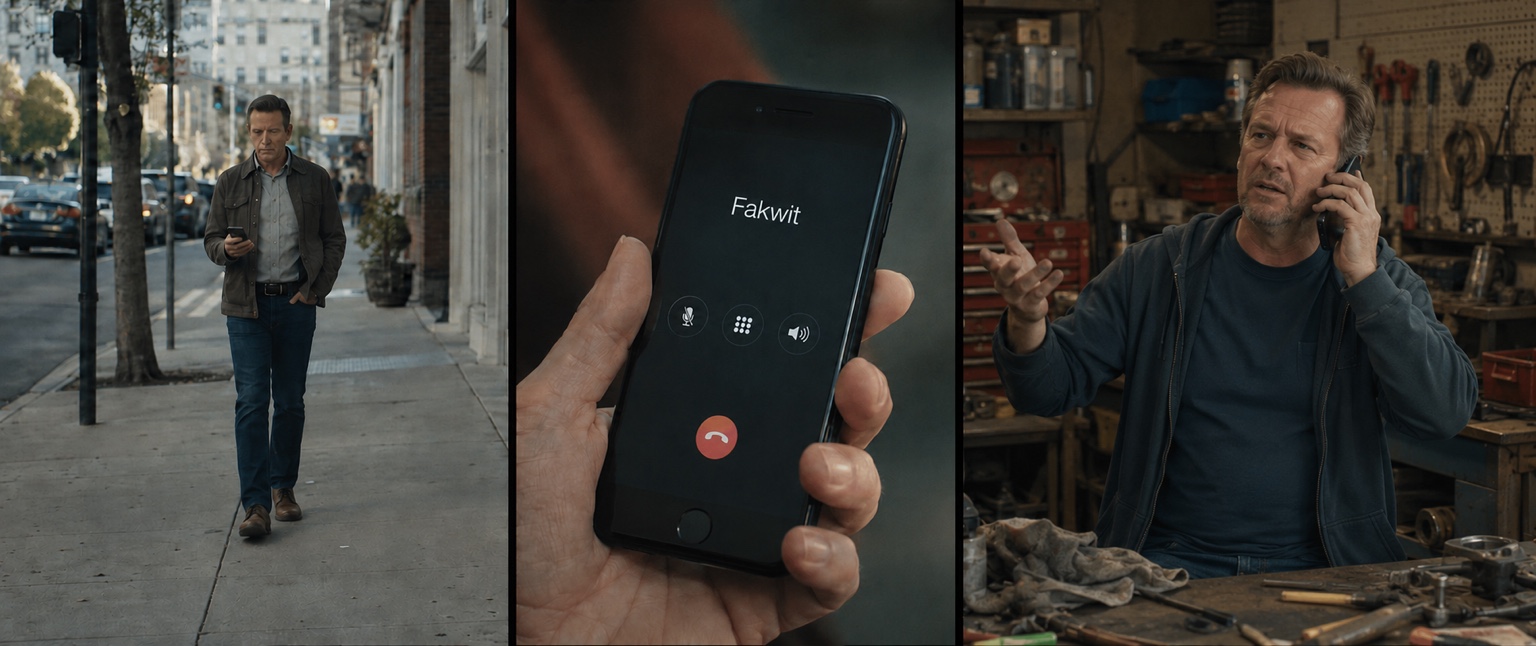
The call ends. The life continues.
The protagonist says very little during most of these calls. Sometimes he becomes distracted and hangs up while the other person is still talking.
What happens after that is part of the fun.
Some people carry on speaking for several seconds without noticing. One pauses and looks at the phone with a silent How rude. Another appears mildly wounded but pretends not to care. Someone else turns to the person beside them and continues the same story as though the protagonist was only ever a temporary audience.
The call ends for him, but their lives continue.
Bean Counter
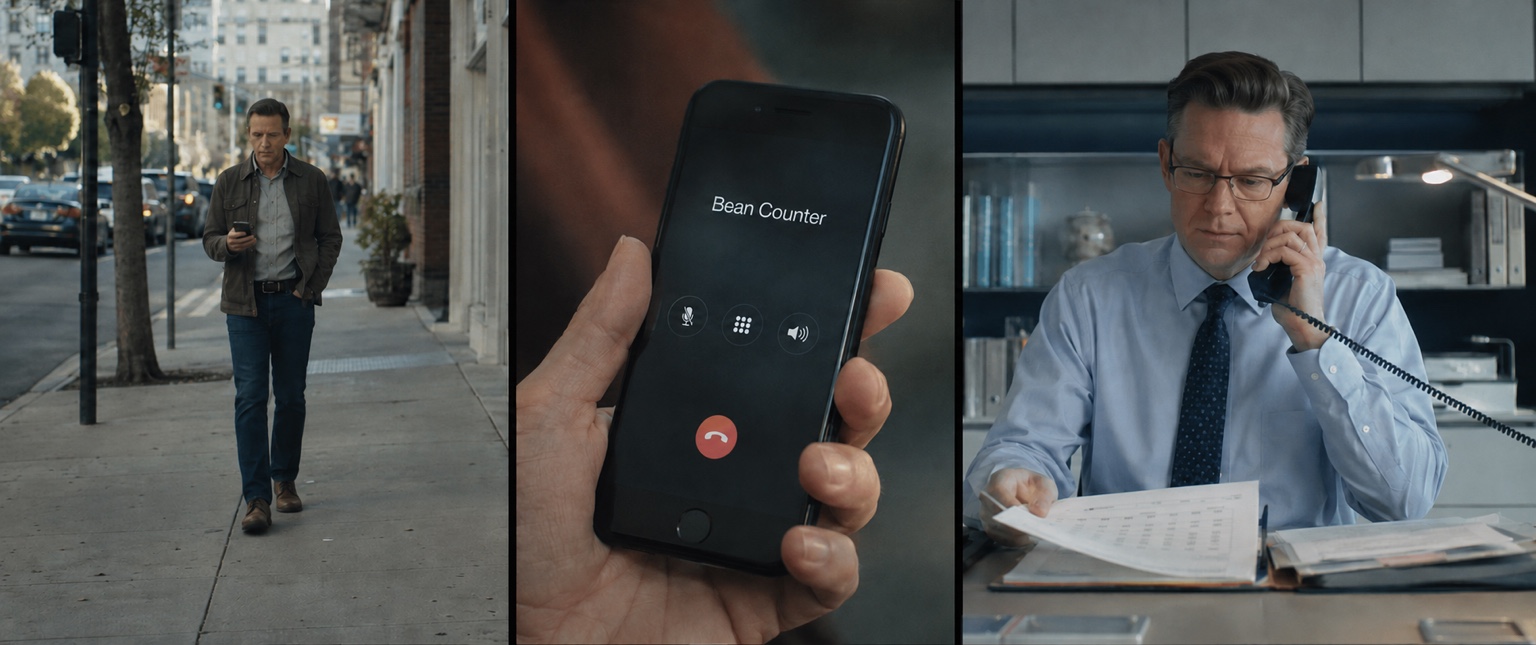
One of the contacts is Bean Counter.
He answers from an immaculate office and begins speaking in a flat, legalistic voice about taxes.
“The difficulty is that you have classified the purchase as a deductible expense when, from the description provided, it appears to have been primarily recreational in nature. Furthermore, if the horse was never actually used in the course of—”
The protagonist hangs up.
The accountant continues.
“—generating assessable income, then it would be difficult to establish—”
He finally notices the call has ended.
He shows almost no reaction. Perhaps this happens quite often. He adjusts a document on his desk and calls the next client.
Everyone in their own world
That is one of the parts of the idea I like most.
Each person gets to be entirely themselves for the brief time they occupy the screen. We see them in their own habitat, absorbed in their own personality and carrying on with their own life. They are not merely supporting characters waiting for the protagonist to contact them. For those few moments, the film belongs to them.
The accountant gets to be magnificently, relentlessly the accountant. The childhood friend inhabits the dense, shorthand world of a friendship formed before either man became whoever he is now. A woman sits in a bath, remembers a romantic encounter and says, “I was just thinking about you,” with the relaxed confidence of someone who knows exactly what she is doing.
The plumber
Another call is with the protagonist’s girlfriend. Something between them is slightly tense, although neither says precisely what it is.
He hangs up first.
Her panel remains.
She looks at the dead phone for a moment. Somewhere out of frame, a man asks:
“Does he know I’m here?”
Later, while scrolling through his contacts, the protagonist calls the plumber.
The same man answers.
The girlfriend passes quietly through the background.
The protagonist doesn’t notice. The plumber doesn’t mention it. The film keeps moving. It is a small synchronicity that some people might catch immediately and others might only notice the second time.
Ordinary machinery
Not every character needs a secret, an affair or a concealed horse-related tax offence. Some are simply boring. Some are funny without knowing they are funny. Some tell stories that go nowhere. One may be doing the dishes. Another may answer from beneath a car. Someone else might be standing in a supermarket attempting to choose a tomato while describing a family crisis.
The pleasure would be in allowing each of them to exist fully, without forcing every appearance to justify itself.
All the while, the man keeps walking.
The viewer knows the calls are leading somewhere, but there is no obvious plot connecting them. They are simply fragments of his social world: affection, irritation, history, infidelity, accountancy and people whose real names have long since been replaced by insults.
Nearly
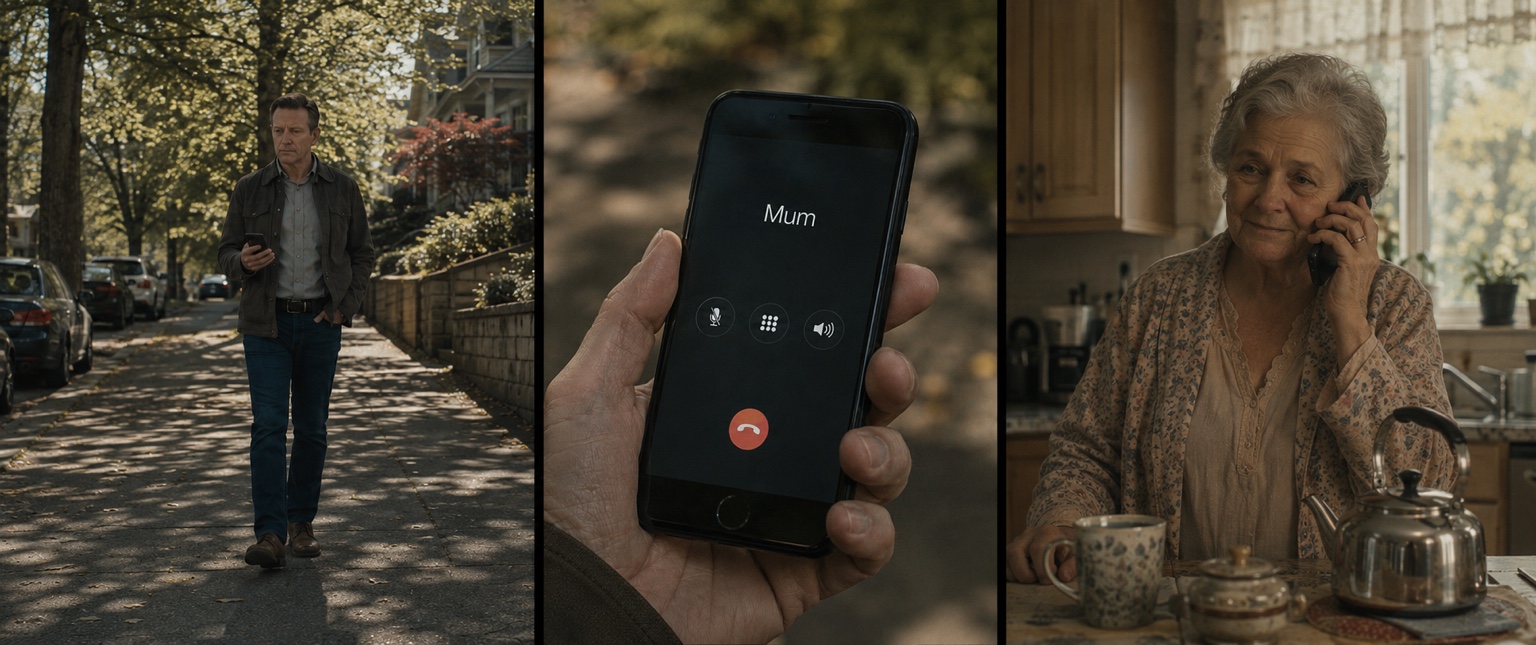
Eventually, he calls his mother.
They do not say much.
“What are you doing, son?”
“Just walking.”
“Are you there yet?”
He looks ahead.
“Nearly.”
Nothing in the conversation reveals where he is going. She does not offer advice or say anything ominous. For anyone watching, it is merely another ordinary call.
He enters a building.
The other panels disappear.
For the first time, the camera moves away from him and rises towards a sign:
Oncology Department.
Cut to black.
What changes
The ending does not mean that all the earlier conversations were secretly about illness. They weren’t. Nobody on those calls knew where he was going. They were talking about plumbing, taxes, relationships and whatever argument began in 1987.
Only his mother knew.
The final image merely changes our understanding of why he made the calls and why he contributed so little to them.
He wasn’t looking for advice.
Perhaps he was not even looking for conversation.
He may simply have wanted to hear the ordinary machinery of his life for a little longer before walking through the door.
Anyway, that was what I thought about on the way to work.
The final scene is still a work in progress. It may remain the oncology department, or the walk may eventually lead somewhere else entirely. At the moment, it is simply the destination that makes everything before it look slightly different.